Three years in, Haosen’s Volvo battery lines lack sign-off and are deep in the red
Haosen's Gothenburg lines, still awaiting final acceptance, had cost more than their contracts were worth by end-2025, its own figures show.

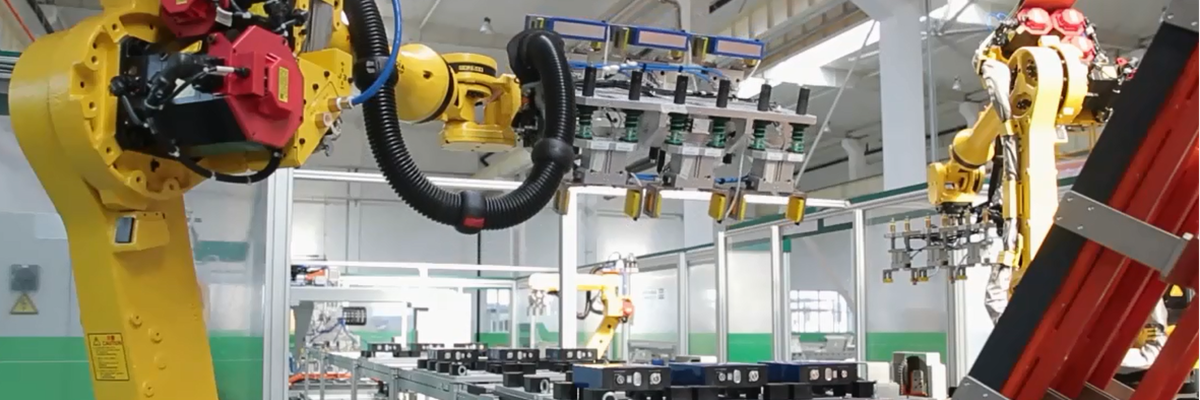
Haosen (豪森智能), a builder of car-factory production lines in Dalian, northeastern China, wrote down 408 million yuan (about US$61 million) in 2025 on two battery production lines it is installing for Volvo Cars in Gothenburg, Sweden. More than three years after signing, the lines have yet to pass final acceptance, which Haosen needs to book their revenue.
A Haosen subsidiary signed the turnkey contract with Volvo Cars, the Swedish carmaker controlled by China's Geely, in May 2023, Haosen announced. It covered a battery module and pack line and a cell coating line, worth 991 million yuan (about US$148 million) in all. Haosen shipped them in November 2024, and Volvo took delivery in early 2025, filings show. Volvo paid Haosen 396.8 million yuan (about US$59 million) in three installments in the first quarter of 2025, according to a June 2025 filing by Haosen’s auditor, Grant Thornton China (致同).
In a July reply to questions from the Shanghai Stock Exchange, Haosen said the main and add-on contracts were worth 1.14 billion yuan (about US$169 million) at the end of 2025. Costs had reached 1.47 billion yuan (about US$219 million), about 334 million yuan (about US$50 million) more, by our calculation. Haosen blamed visa limits and local laws, which it said held back the work. It also cited the customer's changing requirements, which brought add-ons and costlier materials.
The project is still in execution, Haosen said on Nov. 6 in replies to shareholders' questions on the exchange's investor question-and-answer platform. The write-down "does not mean the company has judged that the likelihood of the project passing final acceptance has fallen," it said in one reply. Its third-quarter report cites the same problems at overseas projects and shows 249.7 million yuan (about US$37 million) of impairment losses from January through September 2026, not broken out by project.
Beyond the Volvo job, Haosen's 2025 annual report says several US and European carmakers cancelled some EV investment or delayed EV projects, so Western electrification orders fell short of expectations. Volvo Cars itself said in a September 2024 release carried by Automotive World that it had dropped its goal of an all-electric lineup by 2030, aiming instead for 90% to 100% of sales to be fully electric or plug-in hybrid cars.
Sources
- 豪森股份 Haosen (SSE announcement 2023-036)
- 致同 Grant Thornton China (reply on Haosen 2024 annual report inquiry)
- 豪森智能 Haosen (reply to SSE inquiry letter on 2025 annual report, 2026-020)
- 豪森智能 Haosen (2026 third-quarter report)
- 上证e互动 SSE e-Interactive (Haosen replies)
- Volvo Cars (release carried by Automotive World)
- 豪森智能 Haosen (2025 annual report summary)
- Haosen (Lithium Battery Module Line product page)
Editor: Ian Lamont